
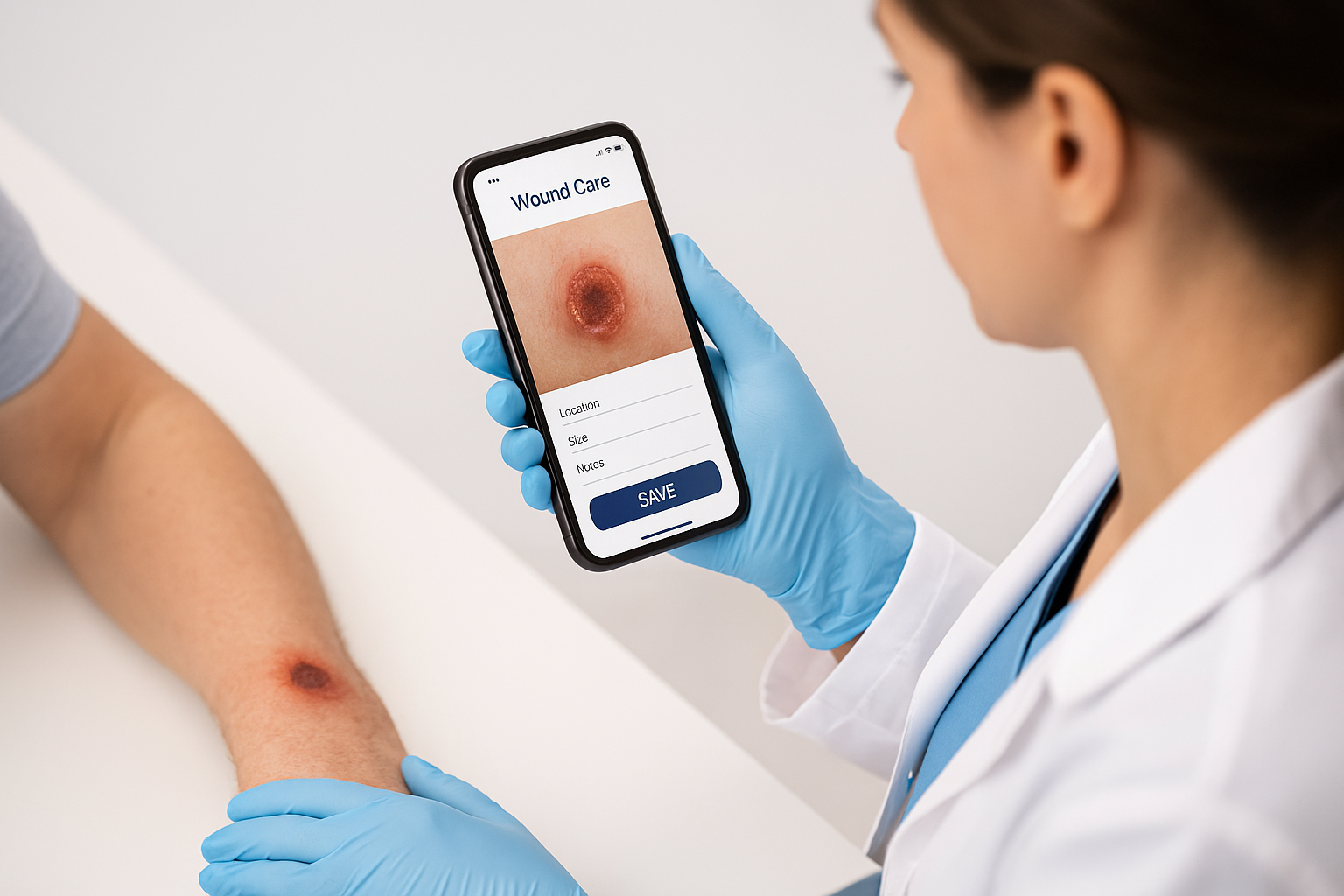
What is a wound care app?
A wound care app is a mobile or web-based tool designed to support the assessment, documentation, and management of acute and chronic wounds. These apps help patients, caregivers, and clinicians track wound healing over time using standardized photos, measurements, care plans, reminders, and secure communication. By digitizing wound data, these solutions aim to improve outcomes, increase efficiency, and reduce unnecessary clinic visits.
Key features to look for in a wound care app
Not all wound care apps are created equal. High-quality platforms typically include a combination of the features below.
Photo documentation and measurement
Accurate photo capture with date-time stamps, standardized lighting or capture guides, and automatic size measurement are fundamental. Look for apps that support reference markers or calibration and that produce consistent images for reliable comparisons.
Treatment plans and templates
Built-in care pathways, dressing recommendations, and editable templates help ensure consistent, evidence-based care. Templates speed up documentation while reducing errors and ensuring important details aren’t missed.
Reminders and patient engagement
Automated reminders for dressing changes, medication, or follow-up checks keep patients on track. Some apps include educational content, checklists, and simple symptom surveys to improve adherence and self-care.
Secure messaging and teleconsultation
Two-way secure messaging and video visits allow clinicians to triage, review photos, and adjust plans remotely. This reduces unnecessary travel and enables faster interventions when wounds show concerning signs.
Analytics, reporting, and EHR integration
Dashboards that show healing trajectories, infection rates, and time-to-heal support clinical decision-making and quality improvement. Interoperability with electronic health records (EHRs) via standards like FHIR is increasingly important for seamless data flow.
Benefits for patients
- Convenience: Fewer in-person visits when progress can safely be monitored remotely.
- Better adherence: Reminders, clear instructions, and educational resources enhance self-care.
- Faster intervention: Early detection of infection or deterioration thanks to photo review and alerts.
- Peace of mind: Direct access to clinicians and a clear record of healing progress.
Benefits for clinicians and care teams
- Improved documentation: Standardized photos and measurements reduce variability and support clinical decisions.
- Workflow efficiency: Templates, automated reports, and remote triage save time and reduce redundant visits.
- Quality tracking: Analytics allow teams to monitor outcomes and identify areas for improvement.
- Collaboration: Easy sharing with specialists or interdisciplinary teams streamlines consults.
How to choose the right wound care app
Selecting the right app involves clinical, technical, and operational considerations. Here are the most important criteria to evaluate before adoption.
Security and regulatory compliance
Ensure the app follows relevant privacy laws (HIPAA in the U.S., GDPR in Europe) and uses strong encryption for data at rest and in transit. Verify vendor policies on data ownership, retention, and breach notification.
Usability and patient experience
The interface should be intuitive for both clinicians and patients of varying tech skills. Look for clear photo guides, large buttons, and multilingual support if you serve diverse populations.
Integration with clinical systems
Seamless EHR integration reduces double-entry and keeps records complete. Support for clinical standards (e.g., FHIR) and simple export/import options can save time during implementation.
Clinical validation and evidence
Choose solutions that have been validated in clinical studies or have documented outcomes. Peer-reviewed evidence or case studies from similar care settings adds confidence.
Cost, support, and scalability
Consider subscription costs, device requirements, onboarding support, and training resources. A scalable solution should work for single clinicians and larger organizations alike.
Tips for using a wound care app effectively
- Standardize photo procedures: use the same lighting, distance, and reference markers for consistency.
- Train staff and patients: brief training sessions and job aids speed adoption and reduce errors.
- Combine remote monitoring with clear escalation rules: know when a photo or message requires an in-person visit.
- Back up and review data regularly: use analytics to identify trends and update care pathways accordingly.
Future trends in wound care apps
Expect more AI-assisted image analysis to flag infections or predict healing time, deeper EHR integrations using FHIR, and expanded telehealth capabilities. Wearables and connected dressings may also feed real-time data into apps, enabling more proactive management.
Conclusion
Wound care apps can transform how wounds are monitored and treated, offering clear benefits for both patients and clinicians when chosen and implemented thoughtfully. Prioritize security, usability, and clinical validation—and standardize processes—to get the most value from these tools.