Care Tips
Choosing Diabetic Foot Ulcer Care Near Irving Homes
Learn how to find expert diabetic foot ulcer in Irving care, including mobile wound visits, advanced therapies, and prevention tips for healing faster.

Many people in Irving with diabetes ask the same hard question: “I have a diabetic foot ulcer, where can I get real help without sitting all day in a clinic or risking the ER?” It is a fair question, especially if walking is painful, you depend on family for rides, or you live in a facility. You want safe care, but you also want to stay in your own bed if you can.
A diabetic foot ulcer is an open sore on the foot that does not heal well because diabetes can damage nerves and blood flow. That sore is not a minor cosmetic problem. Without careful treatment, infection can spread, which can lead to a hospital stay or even amputation, as public health data for people with diabetes show (CDC; Hicks et al., Diabetes Care 2021).
Mobile wound care is one way to close that gap. A Board-certified wound specialist comes to your home or facility near Irving, often with same-week visits, so you can heal at home with hospital-level treatments at your bedside. Early, steady care gives the best odds, but we are always honest: some ulcers take months, and some still need surgery or hospital care even with the right plan.
Key takeaways
Diabetic foot ulcers need fast, structured care to lower infection and amputation risk.
Mobile wound care can bring a Board-certified wound specialist to your home or facility in the Irving and DFW areas, often within the same week.
Medicare Part B-covered home-based wound visits can support care at your bedside, with advanced dressings, debridement, and help arranging tests and imaging.
Not every ulcer can be cured, but the goal is always the same: heal faster when possible, avoid preventable amputations, and keep you safely at home instead of in the hospital.
What a diabetic foot ulcer really means for your health
From a clinical point of view, long-term diabetes can damage nerves, called neuropathy, and blood vessels, which affects circulation. Large studies link these changes to higher risk of foot ulcers and amputations in people with diabetes (CDC; National Institute of Diabetes and Digestive and Kidney Diseases).
In plain English, that means:
You may not feel pain when something is wrong.
A small blister can turn into an open sore.
Once the skin breaks, it may not heal like it used to.
Signs to watch for near Irving homes include:
Redness, swelling, or warmth
Drainage on your socks or shoes
Odor from the foot
Black, gray, or yellow tissue
A callus that suddenly feels tender
Any open sore on toes, heel, or bottom of the foot
If you notice these but do not feel sick, same-week mobile wound care can often see you at your bedside. If you have fever, chills, confusion, or redness streaking up the leg, go straight to the ER. That pattern can mean a deeper infection that needs urgent hospital care and stronger antibiotics.
Prompt bedside evaluation can lower the chance of bone infection, long IV antibiotic courses, or partial foot amputation (Lavery et al., Diabetes Care 2006). Slow or no care does the opposite, raising the chance of more serious problems. You can read more about how providers look at these wounds on the conditions page.
Comparing wound care options near Irving
If you have a diabetic foot ulcer in Irving, you might see care options like:
ER or urgent care
Hospital-based wound center
Podiatry or primary care office
Home health nursing
Mobile wound care visits at your bedside
Here is a simple comparison:
Setting | Travel required | Same-week access / time with provider | Ability to heal at home and Medicare Part B-covered care |
|---|---|---|---|
ER / urgent care | You must travel and wait. | Fast for emergencies, short visits. | Hospital-based, not home-based. |
Hospital or clinic wound center | Travel, parking, waiting room. | Varies, may wait days or weeks. | Outpatient; you travel in. |
Podiatry / primary care office | Travel to office. | Depends on schedule, often brief visits. | Outpatient; you travel in. |
Home health nursing | Nurse comes to you; doctor support varies. | Regular visits, limited procedures. | Home-based; coverage varies by plan. |
Mobile wound care at your bedside | Board-certified wound specialist comes to you. | Often same week, longer focused visits. | Outpatient care at your bedside, often Medicare Part B-covered when medically needed (Medicare.gov). |
Each setting has a role:
ER: Right for rapidly spreading infection, foul odor, high pain, or feeling very sick.
Outpatient clinic: Good for people who can travel easily and wait.
Mobile wound care: Helpful for limited mobility, no easy transport, high fall risk, or living in facilities across the Irving and Dallas, Fort Worth area.
These choices are not either/or. A Board-certified wound specialist who provides mobile wound care can stay in touch with your hospital team and primary doctors, so your plan is the same across settings. You can explore how different treatments fit together on the treatments page and the locations page.
What to expect from mobile wound care at your bedside
Once you call or request help online, the process usually looks like this:
Intake questions about your wound, other health issues, and medications
Review of your insurance and Medicare Part B-covered benefits
Same-week or next-available visit if the ulcer is active or at higher risk
At the first visit, at your bedside, the Board-certified wound specialist will usually:
Examine both feet and legs
Check pulses and circulation, sometimes with a handheld device
Measure and photograph the wound to track progress
Look for signs of infection
Talk about blood sugar control and footwear habits
If needed, we may order labs or imaging and coordinate them locally. Some patients may also be candidates for advanced options that are described on the hyperbaric oxygen therapy page.
Common treatments during mobile wound care include:
Debridement, careful removal of dead tissue so healthy tissue can grow
Advanced dressings chosen for your specific wound and skin
Offloading with boots, shoes, or padding to take pressure off the sore
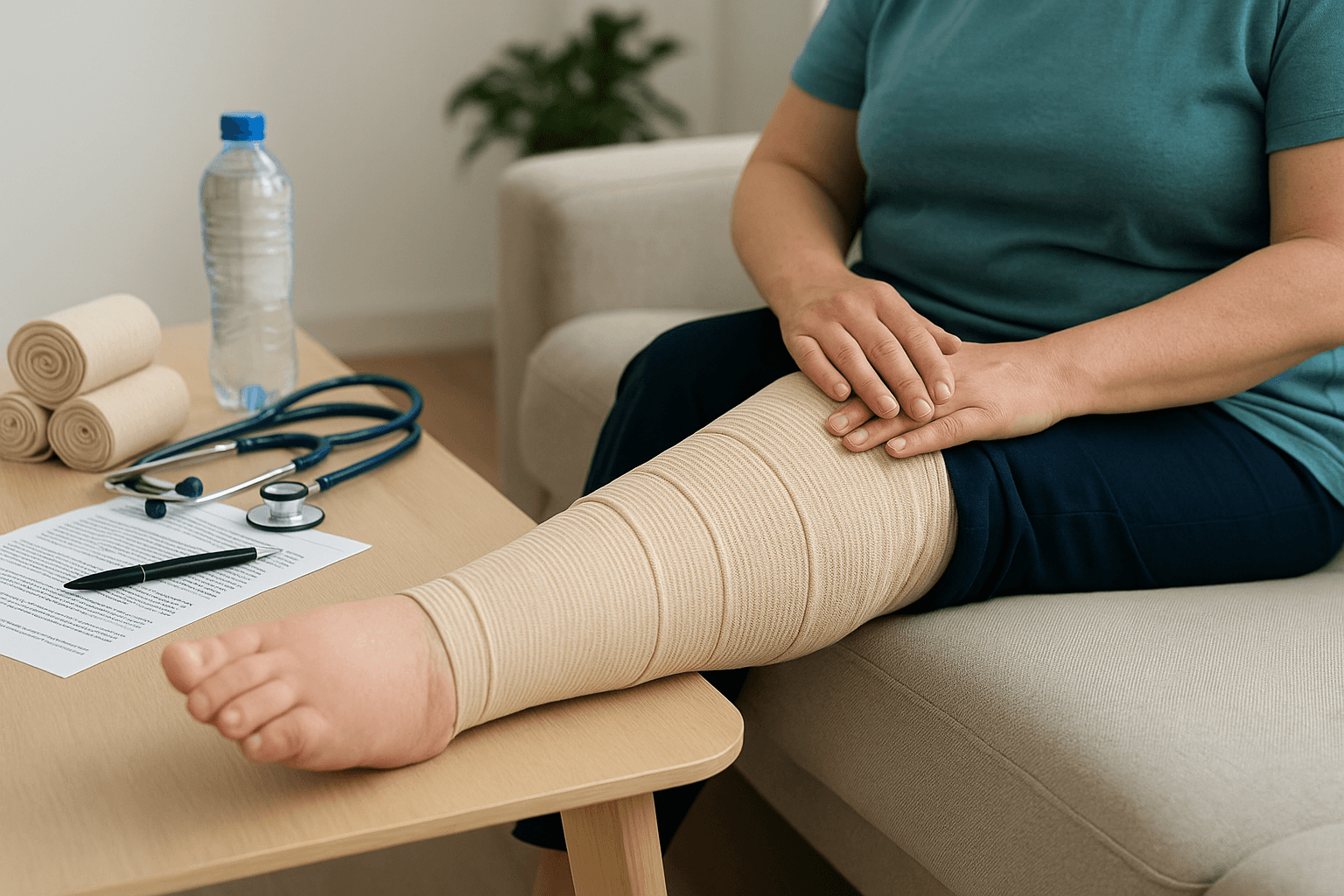
Compression for swelling when it is safe for your circulation
You also get plain language teaching for you and your family, including what is okay at home and what signs mean you should seek ER help.
“The mission is simple: keep patients safe, keep them moving, and keep them home whenever it is medically appropriate,” says Dr. Brandon Elrod, DO, FAPWCA, Captain, US Army (Ret.). “That means clear plans, honest expectations, and regular follow-up, not just a one-time bandage.”
Some wounds still need surgery, vascular procedures, or IV antibiotics in the hospital. Mobile wound care can help spot these needs earlier and line up the right referrals instead of waiting until things are urgent. You can see a broader view of foot and leg issues on the conditions section.
Insurance, Medicare, and getting same-week help
For many people with a diabetic foot ulcer in Irving, care at home is billed under outpatient rules. Medicare Part B-covered services may apply when wound care is medically necessary, with deductibles and coinsurance similar to a clinic visit, as outlined on Medicare.gov.
Many people also have secondary insurance or a Medicare Advantage plan. In many cases, these plans may help cover mobile wound care when certain criteria are met. The clinical team usually checks your coverage, explains what is expected up front when possible, and works on needed pre-authorizations for advanced therapies.
In simple terms, you should know:
Where your wound care will happen
Who is coordinating the plan
What is covered and what is not, as clearly as possible
In the Irving and wider DFW area, patients in private homes, assisted living, and skilled nursing may all be candidates for mobile wound care, depending on medical needs. Same-week scheduling is often used for new or worsening ulcers, while long-standing but stable wounds may follow a more regular pattern. For some families, learning about how these services grow in other areas through the franchise page can also be helpful context.
How to protect your feet and stay safely at home
Treatment and prevention go together. Studies show that people who have had one diabetic foot ulcer are more likely to have another in the future (Armstrong et al., New England Journal of Medicine 2017), so we always think about the next step, not just the current sore.
A simple foot protection checklist near Irving homes:
Look at your feet every day, including between toes and on the bottom. Use a mirror or ask for help if you cannot see well.
Wear shoes that fit well, with enough room for toes, and avoid walking barefoot, even inside.
Ask your care team whether diabetic socks or inserts are right for you.
Keep blood sugar as steady as you can under your diabetes plan.
Avoid smoking, since it can affect blood flow and healing.
Keep regular visits with your diabetes and vascular teams so circulation problems are addressed early.
With ongoing mobile wound care, a Board-certified wound specialist can also keep an eye on early pressure spots, calluses, and color changes at your bedside. That way, we can adjust offloading, dressings, or follow-up before a new ulcer forms.
Even with careful habits, some people with long-term diabetes or severe circulation problems still develop ulcers. The goal is not perfection. The goal is early warning, fast response, and steady care so you have the best chance to heal at home and avoid preventable time in the hospital.
FAQ
How do I know if my foot sore is a diabetic foot ulcer?
If you have diabetes and notice an open sore, blister, or crack on your foot or toes that is not getting better after about one to two weeks, or is getting worse, it may be acting like a diabetic foot ulcer. Redness, swelling, drainage, or odor are warning signs that you should seek a wound specialist for a full exam, either at your bedside with mobile wound care or in another care setting.
When should I go to the ER instead of calling mobile wound care?
Go to the ER right away if you have fever, chills, shaking, spreading redness up your foot or leg, severe pain, confusion, or you feel very sick overall, even if the wound looks small. After the hospital works on the urgent problem, mobile wound care can often help with follow-up so you can heal at home and lower the chance of being readmitted.
Is mobile wound care for diabetic foot ulcers covered by Medicare?
For people who qualify, many mobile wound care services can be Medicare Part B-covered when they are medically necessary, similar to an outpatient clinic visit (Medicare.gov). Deductibles and coinsurance may apply, and your care team can help review your specific benefits.
What happens during a home visit for a diabetic foot ulcer in Irving?
A Board-certified wound specialist comes to your home or facility, examines your feet and legs, measures and documents the ulcer, and checks for infection. You receive a care plan that may include debridement, advanced dressings, offloading devices, and clear instructions on daily care and warning signs, with the shared goal of helping you heal at home when it is medically safe.
How often will I need visits for my diabetic foot ulcer?
Many people are seen about once a week at first, because frequent checks and dressing changes can help healing and catch trouble early (Game et al., Diabetes Metab Res Rev 2016). As the ulcer improves, visits may become less frequent, but the schedule is based on wound size, depth, blood flow, infection risk, and your overall health.
Mobile wound care for assisted living or nursing facilities?
Yes, mobile wound care can see patients at their bedside in assisted living, memory care, and skilled nursing facilities around Irving and the Dallas, Fort Worth area. The wound specialist works with facility nurses and your existing doctors so your wound care plan stays clear and consistent, even if your living setting changes.
Contact us to heal at home
To ask about same-week mobile wound care with a Board-certified wound specialist in the Irving area, call (940) 843-1455 or book online. Medicare Part B-covered options and other insurance plans are reviewed before treatment when possible, and Dr. Brandon Elrod, DO, FAPWCA helps oversee needed pre-authorizations for advanced wound therapies.
References:
Centers for Disease Control and Prevention (CDC). Diabetes and foot complications.
National Institute of Diabetes and Digestive and Kidney Diseases (NIDDK). Diabetic neuropathy.
Medicare.gov. What Part B covers.
Hicks CW, Selvarajah S, et al. Burden of diabetic foot ulcers and amputations. Diabetes Care. 2021.
Lavery LA, Armstrong DG, et al. Risk factors for foot infections in individuals with diabetes. Diabetes Care. 2006.
Armstrong DG, Boulton AJM, Bus SA. Diabetic foot ulcers and their recurrence. N Engl J Med. 2017.
Game FL, et al. A systematic review of interventions to enhance the healing of chronic ulcers of the foot in diabetes. Diabetes Metab Res Rev. 2016.
Take The First Step Toward Protecting Your Feet Today
If you or a loved one is living with a diabetic foot ulcer in Irving, our team at Anchor Wound Management is ready to help you get the specialized care you need. We focus on early intervention, advanced treatments, and personalized follow-up to support better healing and prevent complications. To schedule an appointment or ask questions about your options, please contact us today.