Conditions
Non-Healing Incisions in Dallas: Red Flags by Surgery Type and Next Steps
Learn key red flags for non-healing surgical wounds after C-section, orthopedic, or hernia surgery, and when to request cultures, imaging, or vascular workup.
When a surgical incision stays red, leaky, or painful, it is stressful and scary. You might be staring at a C-section, knee, or hernia scar thinking, "This still looks angry, is this normal or dangerous?" We see that worry every week across Dallas, Fort Worth for non-healing surgical wounds. In this guide, we will walk through what normal healing looks like, the red flags by surgery type, and when to ask your team for a culture, imaging, or blood flow testing. We will also explain how Mobile wound care, with a board-certified wound specialist at your bedside, can help you heal at home whenever it is safe.
Key Takeaways
Normal healing means less pain, less redness, and less drainage over time
C-section, orthopedic, and hernia incisions each have their own warning signs
Non-healing surgical wounds often need culture, imaging, or vascular studies, not "just another antibiotic"
Mobile wound care can often see you in the same week at your bedside so you can heal at home
Some problems still require the ER or the operating room, and we will be honest about those limits
What Normal Healing Looks Like After Surgery
Right after surgery, your body is in repair mode. A normal incision follows a fairly steady pattern.
Days 1 to 3
Mild swelling and bruising
Pink or light red line right at the cut
Clear, straw-colored, or slightly bloody drainage that slowly lessens
Days 4 to 10
Redness and swelling start to calm down
Less drainage, bandages stay mostly dry
Pain starts to ease instead of getting worse
Weeks 2 to 6
The line flattens and lightens
Itching replaces sharp pain
You move more easily without a big flare of soreness
Normal warmth feels like "a bit warm" around the line, not "hot to the touch." Normal soreness feels like a bruise, not deep, throbbing pain that keeps you awake.
Drainage is a big clue with non-healing surgical wounds:
More normal: small amount, clear or light pink, slowly decreasing
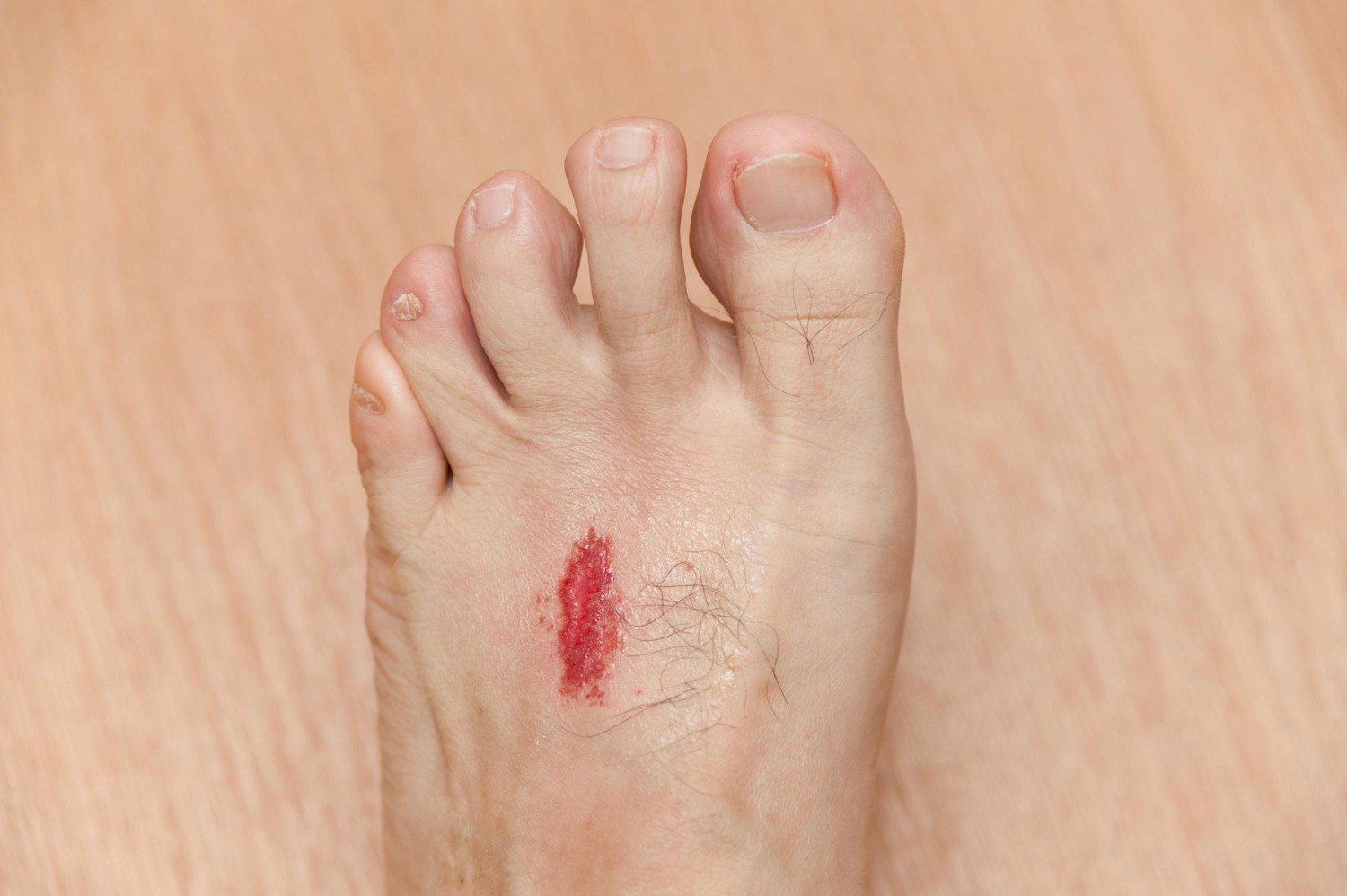
Concerning: thick pus, bad smell, green or brown color, or a sudden jump in amount after it had slowed
Different surgeries cut through different layers, like skin, fat, uterus, bone, or muscle. That is why a stubborn C-section, knee, or hernia wound may need different tests. You can read more about common wound types on our [conditions page]().
C-Section Incisions That Are Not Healing
C-section incisions live in a tough neighborhood: lower belly, sweat, friction, and often a skin fold. Diabetes, higher weight, and prior C-sections all raise the risk that the wound will struggle. The CDC notes that post-cesarean infections are a known concern, especially with other health problems (CDC, Surgical Site Infection Guidelines).
Red flags for a C-section scar:
Redness spreading beyond the line that feels hot on your fingers
Edges pulling apart or a yellow or black patch in the middle
Fever, chills, foul smell, or a big jump in pain after a few better days
Ask about a wound culture if:
Drainage lasts more than 7 to 10 days
Fluid looks cloudy or like pus
You have had more than one round of antibiotics with no clear improvement
Imaging such as ultrasound or CT may be needed if:
There is a painful bulge that feels deep and tender
You have had multiple C-sections or mesh in the area and the pain is deeper than the skin
For new parents, repeated clinic trips are hard. Mobile wound care can bring a board-certified wound specialist to your bedside for cleaning, debridement, and careful follow-up so you can heal at home whenever it is safe. Heavy bleeding, severe abdominal pain, or high fevers still need your OB or the ER right away.
Orthopedic and Hernia Incisions, Plus When to Ask for Tests
Orthopedic surgery on joints, ankles, or feet carries extra risk because infection can reach bone or hardware. NIH and orthopedic literature report that deep joint infections can threaten the implant and, if not treated early, can risk serious complications including loss of function (NIH, periprosthetic joint infection reviews).
Watch for orthopedic wound red flags:
Drainage that continues beyond 5 to 7 days after surgery
Redness tracking up or down the leg or arm
Edges that look mushy, dark, or begin to separate over metal or a joint
Push for cultures if:
Any joint replacement incision (knee, hip, shoulder) keeps leaking
You keep hearing "it looks okay" but your dressings are wet most days
Imaging gets urgent when:
There is hardware or a prosthetic joint under a non-healing wound
You have new fevers, night sweats, or deep, aching pain
For leg and foot surgeries, blood flow matters. Poor pulses, cool toes, or a wound that has simply stalled can signal low circulation, especially in people with diabetes or who smoke. In Dallas, Fort Worth, where many people live with these conditions, non-healing surgical wounds below the knee should often trigger arterial studies ordered by your care team. Mobile wound care can coordinate those studies and treatments listed on our [treatments page](), so a board-certified wound specialist can help you heal at home when it is safe to stay out of the hospital.
Hernia repairs range from small to very complex with mesh. Even when healing is slower, the direction should be forward.
Hernia incision red flags:
A growing, painful, or hot bulge near the scar
Ongoing or repeat drainage, especially from tiny pinholes
Skin breaking down with exposed sutures or visible mesh
Ask for culture and imaging if:
Drainage keeps showing up past 2 to 3 weeks
Fluid is cloudy or foul smelling
There is concern for fluid pockets around mesh that might need ultrasound or CT
Some mesh infections need:
Long-term, culture-guided antibiotics
Drainage of deep fluid collections by interventional radiology
A return to the operating room to remove infected mesh
Mobile wound care can lower the number of ER trips just for "wound checks" by doing frequent, sterile dressing changes and measuring progress at your bedside. When surgery is the safer option, we work with your surgeon to get you to the right place.
How Common Surgical Incisions Compare
Surgery type | Normal healing | Red flags | When to ask for culture | When to ask for imaging / vascular tests | How Mobile wound care can help |
|---|---|---|---|---|---|
C-section | Thin pink line, mild clear drainage that lessens over days | Spreading redness, opening edges, foul smell or pus | Persistent drainage past 7 to 10 days, cloudy or pus-like fluid | Deep bulge, suspected abscess or fluid pocket | Same-week visits at your bedside for dressing changes, debridement, and monitoring so you can heal at home |
Orthopedic (joint, ankle, foot) | Bruising and mild swelling that improve over time | Drainage past a week, more pain with weight or movement | Any ongoing drainage, especially over a joint or hardware | Concern for bone infection, deep pain, or poor pulses in the leg or foot | Mobile wound care at your bedside with surgeon input, plus help arranging imaging and vascular studies |
Hernia | Firm but stable bump, mild soreness that slowly improves | Growing bulge, visible mesh, cloudy or bad-smelling drainage | Persistent cloudy or smelly fluid, or repeat drainage from pinholes | Suspected fluid pockets near mesh or deeper infection | Regular sterile dressing, monitoring, and coordination with your surgeon so you can stay home when it is safe |
When to Ask for Culture, Imaging, or Vascular Testing
A few simple rules can help across all surgery types:
If the wound is not clearly better in 2 weeks, it needs focused attention
If it is not closed on schedule for its depth, ask why
If redness, pain, or drainage get worse after getting better, treat that as a warning
Ask directly about a wound culture when:
There is pus, bad odor, or cloudy fluid
You have had repeated antibiotics but no lab test to see which germs are present
The CDC and infectious disease experts stress culture-based treatment so you get medicine that fits the bacteria instead of guessing (CDC, Antibiotic Stewardship; IDSA guidelines).
Ask about imaging when:
Pain feels deep and throbbing under the wound
You have fevers, chills, or feel generally sick
The top skin closes then breaks down again, like something under the surface is not right
Vascular workup is non-negotiable when:
A foot, ankle, or lower leg wound is not healing in someone with diabetes, kidney disease, a smoking history, or known heart or blood vessel disease
Toes look pale, purple, or mottled, or feel cool
Pulses at the ankle or foot are weak or missing
A mobile, board-certified wound specialist can often see you in the same week at your bedside, order arterial ultrasounds or other tests, and share results with your surgical and primary care teams. Some patients may also be candidates for advanced options like [hyperbaric oxygen therapy]() when appropriate, which we describe on our treatment pages.
As Dr. Brandon Elrod, DO, FAPWCA, Captain, US Army (Ret.), says: "A surgical incision that is not healing is not a failure, it is a message. Our job is to read that message early, check blood flow, infection, and pressure, and give the wound what it needs so you can stay in your own bed, not a hospital bed."
FAQ: Non-Healing Surgical Wounds in Dallas, Fort Worth
How Long Should a Surgical Incision Take to Heal?
Most skin-level incisions look much better by about 2 weeks and are largely closed by 4 to 6 weeks. Deeper surgeries through muscle, joint, or bone can take longer, but the trend should be steady improvement, not back and forth.
When Should I Worry About My C-Section Scar?
Call your OB or a wound specialist if redness spreads beyond the scar, the area feels hot and throbbing, or you notice foul smell or pus. Any gap that opens in the incision or deep pocket under it needs prompt evaluation.
Can a Wound Care Doctor Really Come to My Home?
In many parts of Dallas, Fort Worth, Mobile wound care teams can see you at your bedside, often in the same week. These visits focus on careful assessment, cleaning, debridement, dressing, and ordering tests like cultures or vascular studies when needed so you can heal at home whenever it is safe.
Does Medicare Part B Cover Mobile Wound Care?
Medicare Part B often covers medically necessary wound care services, including Mobile wound care delivered in the home, when certain criteria are met, as described by Medicare.gov (Medicare.gov, Part B Coverage). Exact coverage depends on your situation and the services provided.
What if My Surgeon Says the Incision Looks Fine but It Drains?
Persistent drainage, especially if it is cloudy, bloody, or foul smelling, usually deserves a wound culture and sometimes imaging, even if the skin looks "not too bad." It is reasonable to ask directly for testing and to involve a board-certified wound specialist for another expert opinion.
When Is the ER Safer Than Home Wound Care?
Go to the ER right away for high fever, chills, confusion, heavy bleeding, sudden severe pain, shortness of breath, or fast-spreading redness that streaks up the limb. Home-based wound care is powerful support, but it does not replace emergency care when your whole body could be in danger.
What to Do Next If You Are Worried About a Surgical Incision
If your incision is not clearly improving, ask your surgeon or primary doctor about a culture, imaging, and blood flow testing, and whether Mobile wound care with a board-certified wound specialist could safely help you heal at home under Medicare Part B-covered care when eligible.
Take Control Of Stubborn Post-Surgical Wounds Today
If you or a loved one are struggling with non-healing surgical wounds, we are here to help you move toward real, lasting recovery. At Anchor Wound Management, our specialized team evaluates the cause of delayed healing and creates a treatment plan tailored to your needs. We will walk you through every step so you understand your options and feel confident in your care. To schedule an appointment or ask questions, please contact us.