

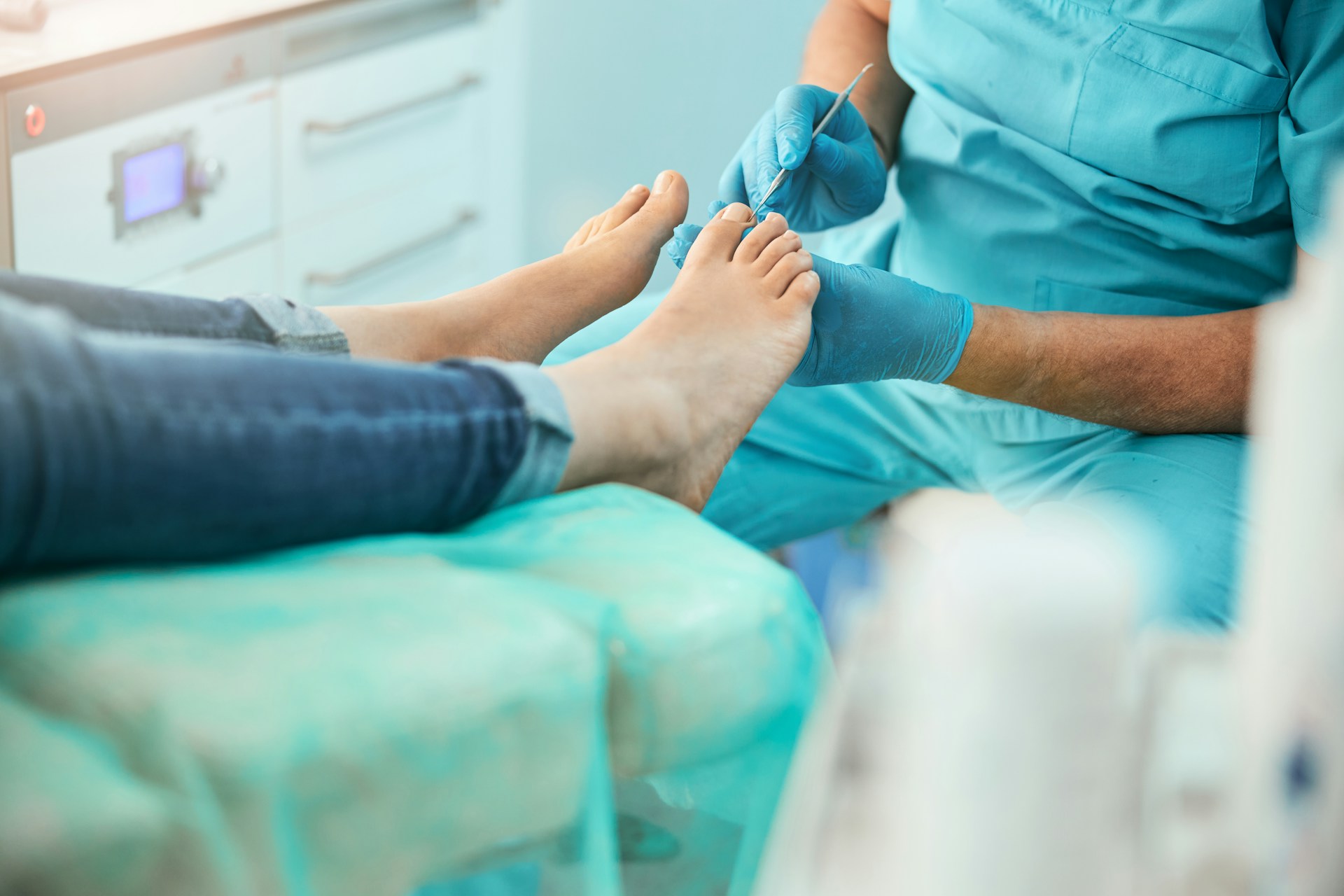


When Non-Healing Skin Will Not Get Better Near Dallas
When a sore will not close, it is hard to know where to start. Many people near Dallas type "dermatologist" or "wound care" and hope they pick the right door.
Clinically, a "chronic" or "non-healing" wound is one that does not show steady progress after about 4 weeks of care. In everyday life, that looks like leg ulcers that keep draining, diabetic foot wounds, pressure injuries from sitting or lying in one spot, radiation injuries, or post-surgical cuts that stay open.
The big question is simple: when do you need a skin doctor, and when do you need a mobile wound care team at your bedside so you can heal at home and avoid the ER or amputation?
Key Takeaways
- Dermatology focuses on diagnosing skin disease; wound care focuses on closing open skin and preventing complications.
- Wounds older than 4 weeks usually need a board-certified wound specialist, not just more cream changes.
- Mobile wound care near Dallas can often see you the same week at your bedside so you can heal at home.
- Dermatology, wound care, and your primary team should work together, not compete.
- Many bedside wound services are Medicare Part B covered when medically necessary (Medicare.gov).
What Is Dermatology, and When Does It Help Non-Healing Skin?
Dermatology is the medical and surgical care of skin, hair, and nails. In plain language, dermatologists are experts at figuring out what a skin problem is and choosing creams, pills, biopsies, and procedures to treat it.
Dermatology is often the right first stop if your main issue is rash, itching, changing moles, blisters, or widespread skin changes rather than a deep, draining wound. Dermatology is especially helpful when the main concern is diagnosis.
Common dermatology tools for skin that is not healing include:
- Biopsies to check for skin cancer, blood vessel inflammation, or autoimmune disease that can cause ulcers (American Academy of Dermatology).
- Prescription creams, pills, and injections that calm the disease driving skin breakdown.
- Office procedures such as freezing precancerous spots, removing growths, or laser and surgical treatments to help prevent future wounds.
Dermatology near you is usually a good first call if:
- You have a new rash, spreading redness, or generalized itching.
- A mole or spot is changing in size, color, or shape.
- You have ulcers linked to suspected cancer, autoimmune disease, or vasculitis that need a clear diagnosis before wound care can fully work.
In many cases, dermatology and wound care work side by side. Dermatology helps name and calm the disease. Wound care manages the open area so you can heal faster and stay out of the hospital.
What Is Wound Care, and Who Needs a Board-Certified Wound Specialist?
Clinical wound care focuses on assessment, debridement, infection control, offloading pressure, compression, and advanced therapies to close chronic wounds and protect limbs. In simple terms, wound care is about getting an open area to close, keeping infection out, protecting blood flow, and helping you stay on your feet at home.
A board-certified wound specialist has extra training for complex problems like diabetic foot ulcers, pressure injuries, venous leg ulcers, and radiation injuries. That added focus matters when the goal is to avoid hospitalization or amputation.
Day-to-day, the difference between wound care and dermatology looks like this:
Aspect | Dermatology (Clinic-Based) | Mobile Wound Care (At Your Bedside) |
Main Location | Office clinics | At your bedside in your home, senior living, rehab, or other facilities |
Visit Pattern | Shorter, less frequent visits | Regular visits, often weekly, with photos, measurements, and dressing changes |
Main Tools | Biopsies, creams, pills, light and laser treatments | Debridement, advanced dressings, offloading boots, compression wraps, and hyperbaric oxygen therapy |
Typical Focus | Diagnose and treat many skin diseases | Heal open wounds and help prevent limb loss |
Mobile wound care near Dallas helps most when:
- A wound has been open longer than 4 weeks.
- You have diabetic foot ulcers, venous leg ulcers, pressure injuries, radiation wounds, or post-surgical wounds that are not closing on schedule.
- You are homebound, in senior living, in a skilled nursing or rehab facility, on hospice, or at high risk of falls and cannot travel easily.
A board-certified wound specialist like Dr. Brandon Elrod, DO, FAPWCA, brings disciplined, step-by-step bedside assessment so serious wounds can often be managed safely at home whenever possible.
How Wound Care and Dermatology Work Together Near Dallas-Fort Worth
This is not an either-or choice. Many people need both. Dermatology helps diagnose and control the disease, and wound care focuses on the open wound and on preventing complications.
Referrals often go both ways:
- Dermatologists send non-healing or complex ulcers to wound care.
- Wound care teams send unexplained rashes, suspicious lesions, or odd ulcers back to dermatology for biopsy and lab work.
Mobile wound care near Dallas can connect with your whole care network. This includes primary care, endocrinology, podiatry, vascular surgery, cardiology, senior living staff, and hospice.
A typical bedside visit may include:
- Measuring and photographing the wound.
- Cleaning and debridement if needed.
- Fresh dressings, pressure offloading, or compression wraps.
- Clear notes back to your main doctor or facility nurse so everyone stays on the same plan.
When wound care happens at your bedside, you may have fewer ER trips and hospital stays, and more time healing at home instead of sitting in waiting rooms. Medicare Part B often covers medically necessary wound care for eligible patients when ordered by a doctor, though exact coverage depends on your plan and documentation (Medicare.gov).
To see if your area is served, you can check current locations on the practice website.
Should You See a Dermatologist or Wound Care First?
Here is a simple guide for common situations:
- "My wound has been open more than a month and is not shrinking."
Start with mobile wound care near you, ideally with a board-certified wound specialist who can see you the same week.
- "My rash is spreading and I do not have open sores yet."
Start with dermatology near you for diagnosis and disease control.
- "My diabetic foot wound smells bad or has black tissue."
This needs urgent wound care and may need same-day ER evaluation.
- "I had a rash, and now there is a deep ulcer."
You probably need both a dermatologist and wound care, working together.
Red flag signs that always need same-day urgent care or an ER include fever, chills, confusion, rapidly spreading redness, sudden severe pain, or streaks going up the leg or arm (CDC and NIH guidance on sepsis and skin infections).
For any visit, try to bring:
- A full medication list.
- Prior biopsy, lab, or imaging reports.
- A list of dressings and treatments already tried.
- Any recent blood sugar, circulation, or heart test results.
Helpful questions to ask both teams:
- What is the likely cause of this wound?
- How will we measure progress?
- What can I do at home to help it heal faster?
Your daily actions matter. Offloading pressure, elevating legs, managing blood sugar, eating enough protein and calories, and avoiding tobacco are all key parts of wound healing (NIH).
There are honest limits. Some wounds will not fully close because of poor blood flow, advanced cancer, or serious systemic disease.
In those cases, care may shift from cure to comfort, odor control, and infection prevention. Not everyone is a candidate for surgery or hyperbaric oxygen, and decisions depend on safety, goals of care, and overall health.
As Dr. Elrod notes, once a wound has not improved in about four weeks, it is time to involve a dedicated wound team. Coordinated dermatology and wound care can still help most people feel better, reduce infection risk, and keep as much time at home as possible.
You can learn more about different wound care tools in general overviews of treatments and how mobile teams serve communities, but the first step is usually getting eyes on your wound at your bedside.
Frequently Asked Questions About Wound Care vs. Dermatology
When to Call Wound Care for a Sore Not Healing
Clinically, if a wound has not improved after about 4 weeks, it is considered chronic (NIH). In plain terms, if it looks the same week after week, or is getting worse, it is time to bring in a wound team. Ask your primary doctor for a referral to mobile wound care near you so you can be seen the same week when possible.
Can a Dermatologist Treat a Diabetic Foot Ulcer or Wound?
Dermatologists can help rule out skin cancers or inflammatory diseases, but diabetic foot ulcers often need offloading, debridement, and close, frequent monitoring (American Diabetes Association; peer-reviewed diabetic foot ulcer guidelines). That is the core work of wound care. If you already see a dermatologist, ask them and your primary doctor whether a mobile, board-certified wound specialist should join your team.
Is Mobile Wound Care Covered by Medicare Part B?
Many medically necessary wound care services are covered under Medicare Part B when ordered by a physician and when documentation shows need (Medicare.gov). Coverage details vary by plan. Your wound care team can help verify benefits, and Dr. Elrod’s office can handle needed pre-authorizations when they apply.
What Types of Wounds Can Heal at Home Instead of at a Wound Center?
Many venous leg ulcers, diabetic foot ulcers, pressure injuries, radiation wounds, and slow post-surgical wounds can be treated at your bedside if you are stable and have proper support (peer-reviewed chronic wound care guidelines). Serious infections, very poor blood flow, or sudden changes may still require a hospital or outpatient wound center. Your wound provider can help decide the safest setting so you can heal at home whenever it is safe.
How Does Mobile Wound Care Work If I Live in Senior Living or Rehab?
The wound team comes to your room, checks the wound, changes dressings, and coordinates directly with facility nurses and your doctors. This keeps care consistent with your existing plan while reducing trips out of the building. Ask your facility nurse which mobile wound services already visit your site.
When Are Hyperbaric Oxygen or Compression Therapies Recommended?
Hyperbaric oxygen is sometimes used for specific chronic wounds, such as some diabetic foot ulcers or radiation injuries, when standard care is not enough and when criteria are met (Undersea and Hyperbaric Medical Society; Medicare coverage policies). Compression therapy is common for venous leg ulcers to control swelling and improve blood flow. Ask your wound team if treatments like hyperbaric oxygen or compression wraps are right for your situation.
Talk with a Board-Certified Wound Specialist About Non-Healing Skin
If a sore near you has not improved in about 4 weeks, or you are worried about diabetic foot ulcers, leg ulcers, or pressure injuries, mobile wound care may help you heal at home and avoid the ER. To schedule a same-week bedside visit when available, call (940) 843-1455 or book online through the practice website.
Most medically necessary visits are Medicare Part B covered and accepted by many insurance plans, and Dr. Elrod’s team can help with benefits checks and pre-authorizations when needed.
Take The Next Step Toward Better Wound Healing Outcomes
If you are still sorting out the difference between wound care and dermatology, we are here to help you choose the right approach for your specific needs. At Anchor Wound Management, we bring specialized bedside wound care directly to you so treatment fits your life instead of the other way around. Reach out to contact us and we will work with you to create a clear, personalized plan for effective wound healing.