Wound Care Basics
Understanding Diabetic Foot Ulcer Care in Irving Homes
Learn safe, effective steps for diabetic foot ulcer in Irving care at home, including warning signs and when to seek mobile wound treatment.
If you are living with diabetes in Irving and looking at an open sore on your foot, you may be asking yourself, "Can my diabetic foot ulcer heal safely at home, or am I headed toward the hospital or even amputation?" That is a serious question, and it deserves a clear, honest answer. Many diabetic foot ulcers can improve and close while you stay at home, but they need early, organized care and close watching. When there is delay or infection, the risk of surgery and amputation can go up.
Our goal is to explain what is really going on with these wounds, what home care can safely handle, when the hospital is safer, and how mobile wound care at your bedside in Irving fits in. We will focus on how you can heal at home whenever it is medically safe to do so.
Key Takeaways
Many diabetic foot ulcers can heal faster with early, structured care at your bedside instead of repeated urgent or ER visits.1,2
The three big protectors of your feet are daily checks, steady blood sugar, and taking pressure off sore spots.
Mobile wound care near you in Irving can bring a board-certified wound specialist to your home or facility, often with same-week visits, so you can try to heal at home when it is safe.
Medicare Part B covered services may apply for medically needed wound care and debridement, with help from a local practice to verify coverage.3
Why Diabetic Foot Ulcers Happen and Why They Stall
A diabetic foot ulcer is a full-thickness break in the skin on your foot, often under the toes, ball of the foot, or heel.1,2 In plain English, it is an open sore that just will not close.
These sores often start because:
Nerve damage from diabetes makes your feet numb, so you do not feel rubbing, cuts, or burns.1
Blood flow problems in the legs slow down healing and bring fewer infection-fighting cells.1,2
High blood sugar hurts your immune system and tissue repair, as explained in CDC and NIH resources.1,2
Once the skin is open, the wound may not heal on its own because there is:
Repeated pressure from walking, standing, or tight shoes that keeps pulling the sore back open.
Thick callus or dead tissue that blocks new, healthy skin from growing.2
Infection hidden in deep tissue or even bone that quietly spreads underneath.2
In plain English, the skin is weak, the blood flow is slow, and the sore keeps getting pushed on. That combination makes healing stall.
What to do: At home, watch for early warning signs: redness, warmth, fluid or pus, new odor, black tissue, or swelling that makes one shoe suddenly feel tighter. If you see a sore that lasts more than a few days, call your diabetes provider or a wound specialist near you. Skip "bathroom surgery," strong chemicals, or burning home remedies, because they can turn a small problem into a deeper ulcer or infection.
Home vs. Hospital Care for Diabetic Foot Ulcers
Many people in Irving bounce between urgent care, the ER, and busy clinics, wondering if there is a safer way to heal at home. Mobile wound care at your bedside is one option, and it helps to compare it with clinic or ER visits so you know what fits your situation.
Here is a simple comparison:
Aspect | Clinic or ER | Mobile wound care at your bedside |
|---|---|---|
Travel and waiting | Repeated trips, long waits, and exposure to sick patients. | Same-week visits at your bedside in Irving homes or facilities, with family able to listen in. |
Continuity of care | Different providers each time and plans that may change or get lost. | Ongoing follow-up with the same board-certified wound specialist and a clear plan. |
Pressure offloading and shoes | Limited time to talk about your flooring, chairs, and shoes. | Real-time review of your shoes and your home layout where you actually walk all day. |
Infection monitoring | Quick checks when things are already worse. | Regular, at-your-bedside checks to catch changes sooner. |
Cost and coverage | Copays and possible facility fees. | Often Medicare Part B covered when medically necessary, with help confirming insurance, based on Medicare rules.3 |
In plain English, mobile wound care lets you stay put while the care comes to you, which can reduce stress and help you heal at home when it is safe.
What to do: Know when home care is not enough. Go to the ER or call 911 for spreading redness up the foot or leg, high fever or chills, confusion, or foul-smelling drainage. Deep infection, dead tissue, or critical blood flow loss usually cannot be safely managed at home, and your wound provider may recommend hospital care or surgery for your safety. You can see where bedside care is offered on our locations page.
What Diabetic Foot Ulcer Care Looks Like at Your Bedside
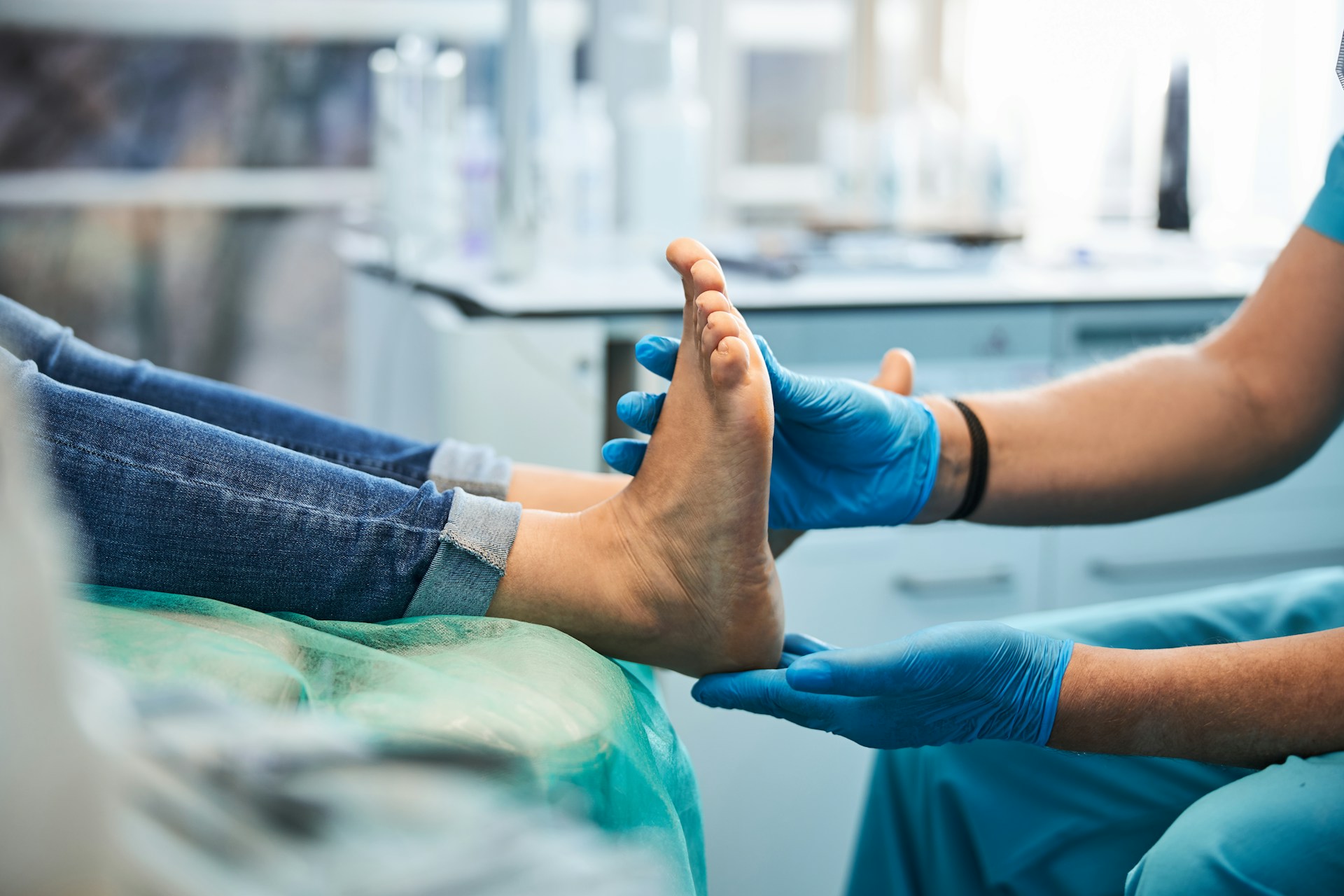
When a mobile wound care team comes to your home in Irving for a diabetic foot ulcer, the first visit is a detailed evaluation. We review your history, medications, and blood sugar control, then check circulation by feeling pulses and skin temperature and, when needed, using simple tests. We also examine your entire foot, including nails, between toes, and any old surgery or amputation sites.
For the ulcer itself, we measure size and depth, look at drainage and odor, and check for signs of infection or exposed bone. This is all documented so progress can be tracked from visit to visit.
Then we prepare the wound bed. In medical terms, this is called debridement, and guidelines from wound-care societies and peer-reviewed studies support it for diabetic foot ulcers.2,4 In plain English, it means gently removing dead tissue and thick callus so healthy tissue has room to grow. We talk through pain control options so you know what to expect and can stay as comfortable as possible.
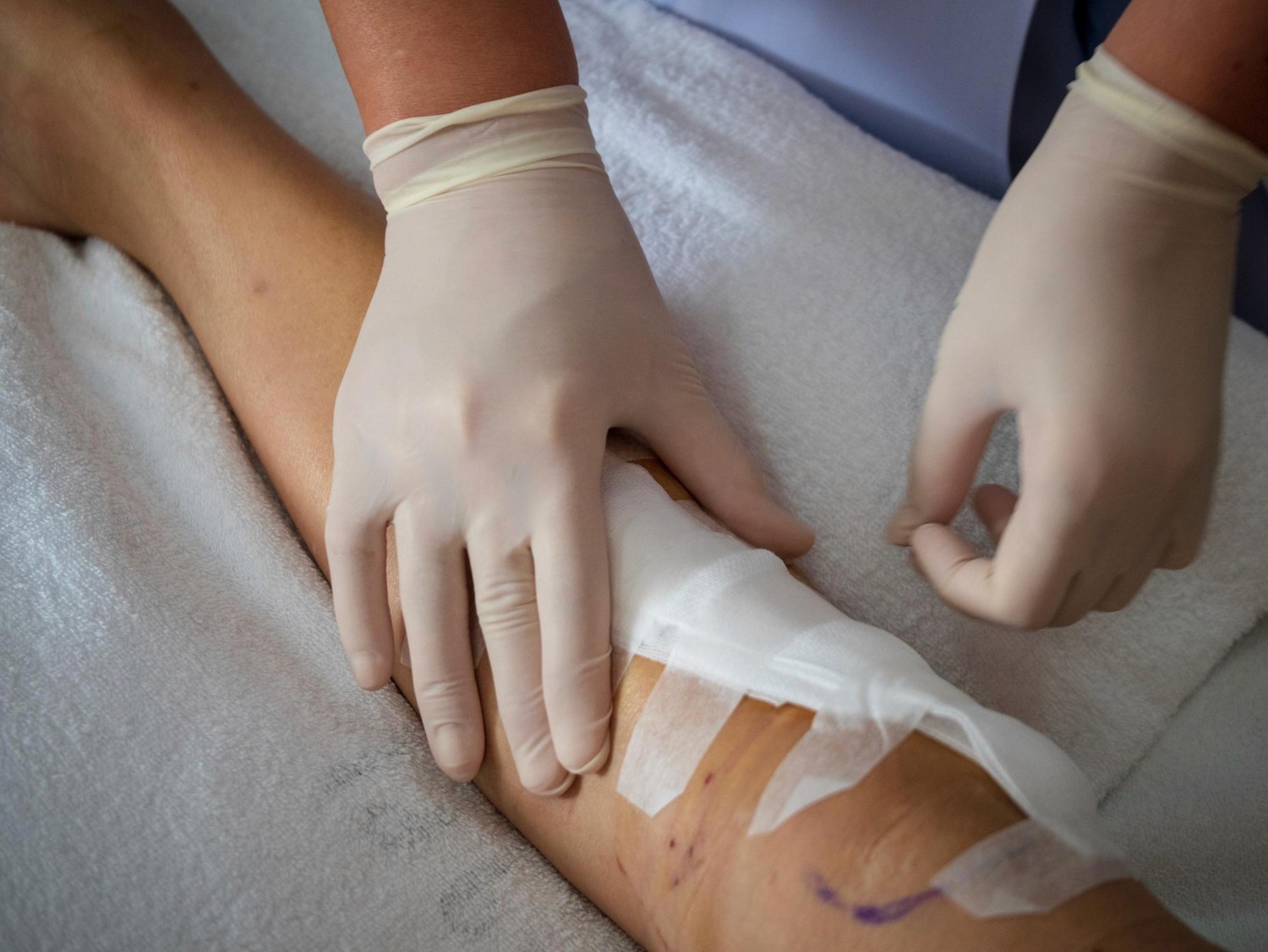
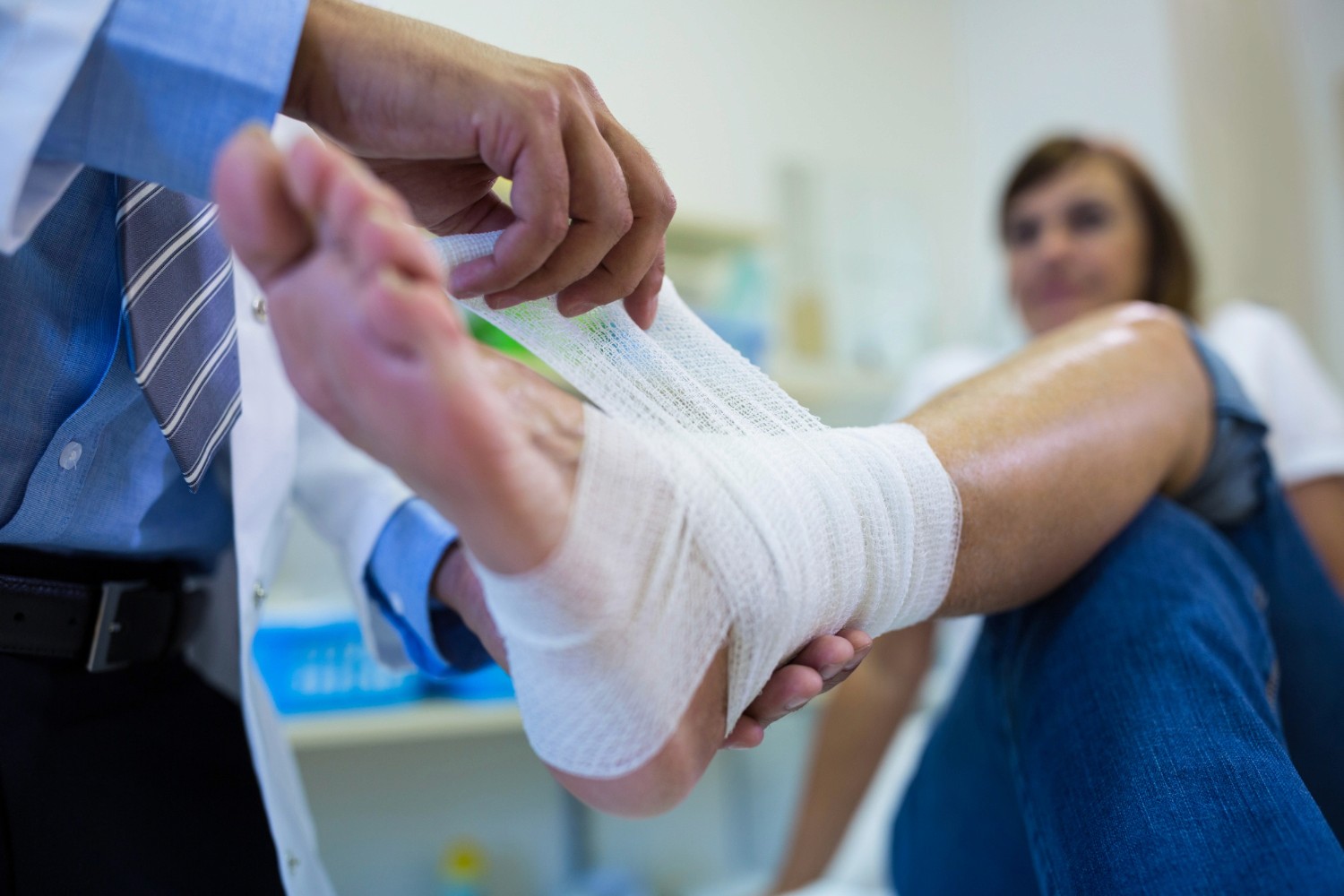
After that, we place dressings that keep the wound "just moist," not soaked and not dry.2,4 This might include foam, alginate, or fiber dressings, and sometimes topical or oral antibiotics if infection is present. When needed, we may discuss advanced options like special tissue products, negative pressure therapy, or offloading boots. You can read more about some of these tools on our treatments page and our overview of hyperbaric oxygen therapy.
Offloading, or taking pressure off the sore, is one of the most important steps.2 That might mean:
Removable cast boots
Custom insoles
Felt padding
Special casts, when safe
In plain English, we work to get weight off the sore so each step does not reopen it.
We also look at your home path from bed to bathroom and kitchen, pointing out trip hazards that can cause new wounds. As Dr. Brandon Elrod, DO, FAPWCA, a board-certified wound specialist, often tells patients, "Clear information, realistic goals, and quick action are key to preventing amputation whenever possible." Between visits, your main jobs at home are to keep dressings changed exactly as directed and to call your wound provider if pain, redness, or drainage changes.
Coordinating Care and Daily Habits to Prevent Recurrence
A diabetic foot ulcer is never "just a skin issue." It connects to your blood sugar, circulation, infection control, and how your foot lands on the ground.
Your wound specialist should coordinate with your primary doctor, diabetes doctor, podiatrist, and, when needed, a vascular surgeon near you in Irving. One clinician watching the wound over time and sharing updates helps keep everyone on the same plan. You can see how this coordinated model works within our broader care approach on the franchise page.
Better blood sugar control is linked with better healing in ADA and NIH sources.2,5 Smoking, certain medicines, and poor circulation can all slow progress. Signs of poor blood flow include night pain, calf pain when walking, cool feet, or pale or bluish toes; if we see these signs during a home visit, we may suggest imaging or vascular procedures.
Even with strong care, some ulcers do not heal or keep coming back. Deep bone infection, called osteomyelitis, may need X-rays, MRI, or other scans.2 Sometimes the safest path to protect your life and as much limb as possible is surgery or hospital care.
To reduce the chances of another ulcer after healing:
Check your feet morning and night with a mirror or helper.
Never walk barefoot, even inside.
Choose closed-toe shoes that fit well, and soft socks without tight bands.
Moisturize dry skin, but keep between the toes dry.
Ask your primary doctor or podiatrist about diabetic shoes and inserts, which can sometimes be Medicare Part B covered for people who meet certain medical rules.3 When any sore, blister, or hot spot lasts more than a few days, or a callus becomes painful, early mobile wound care near you can often handle it before it turns into a deeper ulcer or serious infection.
FAQs About Diabetic Foot Ulcer Care in Irving
Can My Diabetic Foot Ulcer Be Treated at Home or in Hospital?
A wound specialist will look at your overall health, blood flow, signs of infection, and how deep the ulcer goes.2 If there is spreading redness, high fever, confusion, gangrene, or concern for severe infection, hospital care is usually safer so you can receive IV antibiotics, imaging, and surgery if needed.
How Soon Should a New Diabetic Foot Ulcer in Irving Be Seen?
Any new open sore on a diabetic foot should be checked as soon as possible, especially if it has not improved within a few days or you notice drainage, odor, or color change.1,2 Early, same-week evaluation by a board-certified wound specialist gives you a better chance to heal at home.
Is Mobile Wound Care for Diabetic Foot Ulcers Medicare Part B Covered?
Medicare.gov explains that medically necessary wound care and debridement may be covered under Medicare Part B when certain rules are met, such as appropriate documentation and medical need.3 A local mobile wound care practice can review your situation, confirm coverage with your plan, and explain what documentation is required.
What Happens If My Ulcer Is Not Healing Even with Regular Wound Care?
If a wound is not improving, your provider may look deeper at blood sugar control, circulation, footwear, and possible bone infection.2,5 This can lead to new tests, changes in offloading, or referral to other specialists like vascular surgery so you still have the best chance to heal at home when safe.
Can Mobile Wound Care Prevent Amputation or Just Change Dressings?
Mobile wound care is more than dressing changes. Regular bedside exams, debridement, pressure offloading, and early infection checks can all lower amputation risk, especially when combined with good diabetes and circulation care under national guidelines.1,2
How Often Will the Wound Specialist Need to Visit My Home or Facility?
Visit frequency depends on the size of the ulcer, infection risk, and your overall health. Many people are seen weekly at first, with visits spaced out as the wound shows steady healing and you or caregivers are comfortable with dressing changes.
Get Help for Diabetic Foot Ulcers at Home in Irving
If you are seeing a new or stubborn sore on your foot and want to know if you can safely heal at home, our mobile wound care team can evaluate you at your bedside in the Irving area. Call us at (940) 843-1455 or book online for a same-week visit when available. We accept most major insurance plans, work with Medicare Part B covered services when criteria are met, and Dr. Elrod’s team helps handle any needed pre-authorization so you can focus on healing at home.
1. Centers for Disease Control and Prevention (CDC). National Diabetes Statistics Report. cdc.gov.
2. Singh N, Armstrong DG, Lipsky BA. Preventing foot ulcers in patients with diabetes. JAMA. 2005;293(2):217, 228.
3. Centers for Medicare & Medicaid Services. Medicare Coverage of Wound Care. Medicare.gov.
4. Steed DL et al. Guidelines for the treatment of diabetic ulcers. Wound Repair Regen. 2006;14(6):680, 692.
5. American Diabetes Association. Standards of Medical Care in Diabetes. Diabetes Care. 2024;47(Suppl 1).
Protect Your Mobility With Prompt, Specialized Wound Care
If you are dealing with a diabetic foot ulcer in Irving, getting timely care can make a critical difference in healing and preventing serious complications. At Anchor Wound Management, we use advanced treatments tailored to your specific needs so you can stay active and independent. Reach out today to discuss your symptoms, schedule an appointment, or ask questions about your options, or simply contact us to get started.